Textile Manufacturers in Turkey: Fabric, Yarn and Home Textile Sourcing Guide 2026
Turkey's Position in Global Textile Production
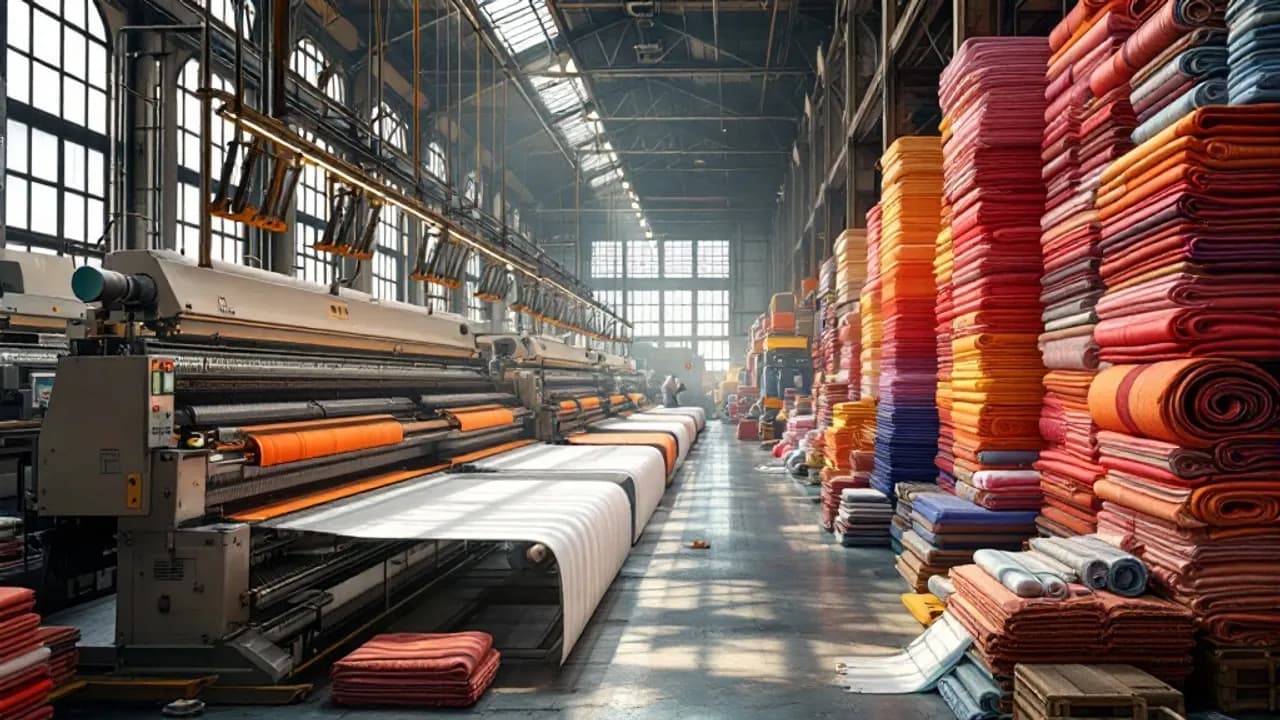
Turkey ranks in the top 5 globally for cotton yarn, denim fabric, and home textile production. The country's textile industry generates over USD 12 billion in annual exports and forms the foundation for its downstream ready-to-wear industry (another USD 20 billion).
For international buyers, Turkish textile manufacturers offer:
- Vertical integration — spinning, weaving/knitting, dyeing, finishing under one roof at many mills
- Aegean cotton — long-staple, premium quality grown in Turkey's western region
- EU proximity — 5-7 day sea shipping, 3-4 day road, zero customs duty
- Certifications — OEKO-TEX, GOTS, BCI, GRS widely available
- Speed — 3-4 week fabric development vs 6-8 weeks from Asia
Turkey's Textile Production Hubs
Bursa — The Textile Capital
The city that made Turkey a textile power. Historical silk center, now dominates:
- Woven fabrics: cotton shirtings, workwear cloth, technical textiles
- Synthetic and blends: polyester, viscose, spandex mixes
- Furniture and upholstery textiles
- Automotive interior textiles (major supplier to Turkish automotive plants)
Key industrial zones: Bursa OSB, Nilüfer OSB, İnegöl.
Denizli — Home Textile Capital
Denizli is the world's largest producer of terry (towel) fabric and a major hub for:
- Bath and beach towels
- Bathrobes
- Kitchen textiles
- Bed linens (percale, satin, jersey)
Denizli exports over USD 2 billion in home textiles annually — Turkey's most concentrated textile district by category.
Gaziantep
Southeastern Turkey's textile hub, specialized in:
- Denim fabric — home to Kipaş, Bossa denim mills
- Machine-woven carpets — Gaziantep produces 75% of Turkey's carpet exports
- Yarn — cotton and blended yarn spinners
Uşak
Focused on:
- Blanket production (fleece, wool blends)
- Duvet and bedding
- Knit fabrics
Kahramanmaraş
- Cotton fiber and yarn spinning
- Denim production (major mills)
İzmir
- Organic cotton — GOTS-certified production
- Aegean cotton processing
- Some silk and premium natural fiber production
Categories: What Turkish Textile Mills Produce
Cotton Yarn
Turkey produces ~1.5 million tons of cotton yarn annually — ring-spun, open-end, compact-spun, all standard counts (Ne 10 to Ne 40+). Aegean cotton (long-staple, similar to Egyptian) commands premium.
Buyers: knitting mills, weaving mills, downstream garment factories
Woven Fabrics
- Shirting (cotton, cotton-poly blends, linen)
- Denim (indigo, black, colored)
- Upholstery (jacquard, damask, chenille)
- Technical (workwear cloth, tent/marine canvas)
- Home textile (percale, sateen for bedding)
Knit Fabrics
- Single jersey (T-shirt base)
- Piqué (polo shirt)
- Interlock (heavier basics)
- French terry (sweatshirt)
- Rib knit (cuffs, necklines)
- Fleece
- Performance knits (moisture-wicking, activewear)
Home Textiles
- Terry towels (bath, hand, beach) — Denizli dominant
- Bed linens (sheet sets, duvet covers, pillowcases)
- Kitchen textiles (tea towels, aprons)
- Bath rugs
Technical Textiles
- Automotive interior (Bursa)
- Medical textiles (nonwovens, wound dressing)
- Geotextiles
- Filter cloth
MOQs, Pricing and Lead Times
Yarn (per single order)
- Standard cotton ring-spun: 1 ton per count/color minimum
- Compact-spun or specialty: 2-3 tons
- Pricing: USD 2.5-4.5/kg depending on count and quality
Fabric
- Woven fabric: 500-3,000 meters per SKU (color/design)
- Knit fabric: 200-1,000 kg per SKU
- Pricing (rough): USD 3-8/meter for cotton woven, USD 4-10/kg for cotton knit
Home Textiles
- Terry towels: 1,000-3,000 pieces per size/color
- Bed sheets: 500-2,000 sets per SKU
- Pricing: bath towel from USD 2 (basic) to USD 8 (premium hotel grade)
Lead Times
- Fabric development (sampling): 3-4 weeks
- Bulk production: 4-6 weeks depending on volume
- Add 2 weeks for dyeing and finishing if custom color
- Total for custom order: 8-12 weeks
For in-stock/off-the-shelf items, lead time drops to 1-2 weeks.
Certifications to Look For
- OEKO-TEX Standard 100 — no harmful substances in end product
- GOTS (Global Organic Textile Standard) — for organic cotton
- BCI (Better Cotton Initiative) — responsible cotton sourcing
- GRS (Global Recycled Standard) — for recycled polyester/cotton
- BSCI / SEDEX — social compliance audits
- ISO 9001 — quality management
- ISO 14001 — environmental management
Toko-vetted mills carry the certifications matching your buyer's requirements.
How to Source Turkish Textile Manufacturers
Direct Approach — What You Need
- Detailed spec sheet: fiber content, GSM (weight), yarn count, weave/knit type, color reference (Pantone), finish
- Volume estimate: annual + per-order
- Certification requirements
- Delivery target date
- Budget range (transparent works better than negotiating up)
Where to Find Manufacturers
- Trade shows: Texworld Istanbul (winter), IF Wedding & Evening Fashion, DOMOTEX Turkey
- B2B platforms: turkishexporter.net.tr, Ekol Group
- Sector associations: ITKIB (Istanbul Textile Exporters), TETSİAD (Turkish Home Textile Industry)
- Toko sourcing — pre-vetted mill shortlist within 1 week
Red Flags
- No physical address given
- Only Instagram/Alibaba profile, no website
- Refuses factory visit
- No certifications
- "Yes to everything" — reputable mills say no to unsuitable requests
Toko's Textile Sourcing Service
Toko Trading maintains active relationships with 60+ Turkish textile manufacturers across all major categories and regions. Our service includes:
- Mill shortlisting — 3-5 candidates matched to your spec within 5-7 days
- Factory visits — with photo/video reports if you can't travel
- Sample development coordination — from tech pack to approved SMS/PP samples
- Price negotiation — leveraging our volume relationships
- Quality control — fiber testing, GSM verification, colorfastness, dimensional stability
- Export handling — full documentation and shipping via sea, road (TIR), or air
- Consolidation — combine multiple mill orders into one shipment
Typical commission: 3-6% of order value for standard textile sourcing.
Sourcing Costs — Beyond the Fabric Price
Total landed cost includes:
- Fabric FOB Istanbul
- Sea/road freight (variable)
- Insurance (~0.3-0.5% of cargo value)
- Import duties in your country (EU: 0% for Turkish origin, USA: 8-16% for textiles)
- Local port handling, delivery
- QC and inspection
For a typical container of cotton fabric ex-Istanbul to Rotterdam:
- Fabric value: USD 40,000
- Sea freight (20ft container): USD 900
- Insurance: USD 150
- EU customs (0% Turkey): USD 0
- Handling & delivery: USD 400
- Total landed: ~USD 41,450 (3.6% overhead)
Compare with China origin: same fabric ~USD 35,000 FOB, but EU customs 8% adds USD 2,800 + higher freight — final landed ~USD 40,500. Turkey often equalizes on landed cost while offering 6-week faster delivery.
Frequently Asked Questions
Is Turkish fabric more expensive than Chinese? Per meter FOB, Chinese is typically 10-25% cheaper. But once EU customs duty (8-12%), longer freight, and lead time cost are factored in, Turkey often wins on total landed cost for European buyers.
Can Turkish mills develop custom fabric? Yes. Most mid-size mills develop custom designs, colors, and blends. Development lead time is 3-5 weeks + samples. For truly novel fabrics, mill R&D departments (Bossa, Kipaş, Zorlu) offer joint development.
Do Turkish mills accept small orders? Yes for small workshops, no for large mills. For orders under 1,000 meters, small Osmanbey (Istanbul) workshops or Toko's consolidation programs work best.
What's Turkey's advantage over Uzbek/Egyptian cotton fabric? Turkey combines cotton availability with mature dyeing/finishing/QC infrastructure. Uzbek and Egyptian cotton are excellent but downstream capacity is limited — most raw cotton from those countries is sent to Turkey for processing.
Source Turkish textile manufacturers with Toko Trading's help. Contact us or request a quote with your product specification — we'll return a shortlist of matched mills, price estimate, and lead time within a week.
See also: Product Sourcing Service in Turkey — our end-to-end process, pricing model and QC standards.