Clothing Manufacturers in Turkey: The 2026 Sourcing Guide (From Istanbul)
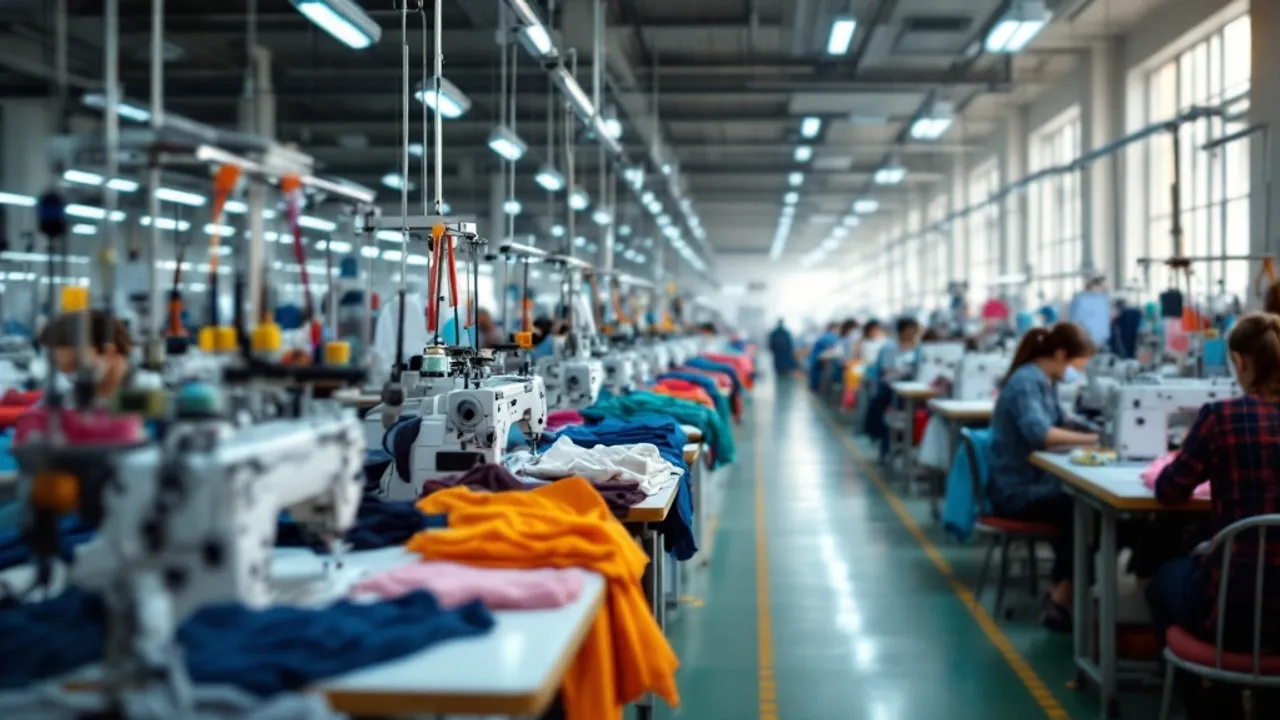
Why Turkey for Clothing Manufacturing?
Turkey is the 6th largest apparel exporter globally with over USD 20 billion in annual clothing exports. For international brands, retailers and importers, Turkey offers a strategic middle ground between Asia's ultra-low cost and Europe's premium pricing:
- Fast fashion turnaround: 4-6 week production cycles vs 8-12 weeks from China
- EU Customs Union: zero customs duties for shipments to the EU (huge advantage over China)
- Vertical integration: cotton growing → yarn → fabric → dyeing → cut & sew all within a 2-hour radius
- Quality standards: BSCI, SEDEX, GOTS, OEKO-TEX widely certified
- Small MOQs available: many Turkish factories accept 300-500 pieces per style vs Asia's typical 1000+
This is why brands like LC Waikiki, Mavi, Koton, Colin's originated here, and why global giants like H&M, Zara, Marks & Spencer, Nike, Adidas source significant volume from Turkey.
Written by Toko Trading — an Istanbul-based sourcing and trading company with 20+ years of experience visiting Turkish clothing factories.
Turkey's Clothing Production Hubs
Not every Turkish clothing manufacturer is in Istanbul. Understanding the geography helps you find the right supplier for your product:
Istanbul (Merter, Osmanbey, İkitelli)
- Focus: Women's and men's ready-to-wear, fast fashion, denim, contemporary fashion
- Strengths: Design capability, small MOQ, quick sampling, close to trade show grounds
- Best for: Brands, boutiques, private label
- Rough pricing: mid to premium tier
Bursa
- Focus: Uniform, workwear, technical textiles, activewear
- Strengths: Fabric production integrated (Bursa is Turkey's textile capital)
- Best for: Corporate wear, sportswear brands, hotel/uniform buyers
İzmir
- Focus: Denim, organic cotton, GOTS-certified sustainable production
- Strengths: Aegean cotton, dye houses with sustainability credentials
- Best for: Sustainable brands, denim programs, organic collections
Denizli & Uşak
- Focus: Home textiles (bath towels, bed linens), knitwear
- Strengths: Terry towel production world-leader
- Best for: Retail chain private label, hospitality
Gaziantep
- Focus: Denim, workwear, home textiles, machine-woven carpets
- Strengths: Lower labor costs than Istanbul, machine park modernized
Corlu, Çerkezköy (Thrace)
- Focus: Basics, T-shirts, mass production
- Strengths: Large factories with export volumes to Zara/H&M scale
- Best for: High-volume basics programs
What Products Do Turkish Factories Make Well?
Turkey excels particularly in these clothing categories:
| Category | Notable Strength |
|---|---|
| Denim | 3rd largest denim producer globally — full vertical from cotton to finish |
| Cotton knits (T-shirts, sweatshirts, polos) | Aegean cotton advantage + fast turnaround |
| Womenswear (dresses, blouses, tops) | Design capability + agile factories |
| Suits & tailoring | Bursa/Istanbul workshops with EU-quality construction |
| Underwear & socks | Full integration + strong export tradition |
| Sportswear & activewear | Adidas, Nike production presence brought technology |
| Uniform & workwear | Established brand suppliers (Vestel, Turkish Airlines, ministries) |
| Kids' clothing | Certified factories for OEKO-TEX + AZO-free dyes |
| Home textiles (bath towels, bed linens) | World-leading terry towel production |
Turkish factories are less competitive in: very cheap fast-fashion (China wins on cost), heavy technical outerwear (Vietnam/Bangladesh leads), luxury tailoring (Italy dominates).
MOQs and Pricing — What to Expect
Typical MOQs
| Factory Type | Typical MOQ per Style |
|---|---|
| Small workshop (Osmanbey) | 100-300 pieces |
| Mid-size manufacturer (Merter) | 300-500 pieces |
| Large export factory (Çerkezköy) | 1,000-3,000 pieces |
| Fully integrated (denim mill) | 3,000-5,000 pieces |
MOQ often depends on fabric type — if the fabric is standard/in-stock, MOQ is lower; if custom-dyed or specialty, minimum is higher.
Pricing Reference (FOB Istanbul, mid-quality)
- Basic T-shirt (single jersey cotton): USD 3-5
- Polo shirt: USD 6-10
- Denim jeans: USD 12-25
- Hoodie/sweatshirt: USD 8-15
- Woven blouse/shirt: USD 8-14
- Suit (2-piece): USD 60-120
- Underwear pack: USD 2-4
These are rough starting points — actual price depends on quantity, fabric spec, wash type, embellishments, and packaging.
How to Verify a Turkish Clothing Manufacturer
Not every "manufacturer" on Alibaba or LinkedIn is actually a factory. Verification steps:
1. Company Legal Check
- Turkey Trade Registry (Ticaret Sicili) lookup — Ministry of Trade website
- Tax number active check
- Ownership and paid-in capital
2. Certifications
- BSCI / SEDEX: social compliance (worker rights, safety)
- OEKO-TEX Standard 100: no harmful substances in fabric
- GOTS: organic cotton production
- AZO-free dyes: children's clothing safety
- ISO 9001: quality management system
3. Physical Factory Visit
The single most important step. What to check:
- Machine park age: sewing machines newer than 5 years indicates investment
- Production capacity: how many pieces per day, per style
- Worker headcount: matches claimed capacity?
- Quality control setup: is there a QC department or just cursory checks?
- Sample room: does the factory develop patterns or just cut & sew?
If you cannot travel to Istanbul, Toko Trading conducts factory audits on your behalf — with photo/video reports and a detailed capability assessment.
4. Sample Approval
Never place a bulk order without physical sample approval. The sample process:
- Send tech pack (spec sheet + reference images + measurements)
- Factory produces "proto" sample (2-3 weeks, USD 30-100 per style)
- Approve/revise → SMS (salesman sample) with correct fabric
- After SMS approval → PP (pre-production) sample from bulk fabric
- Only then bulk production starts
The Toko Sourcing Advantage
For international brands and importers wanting to source clothing from Turkey, Toko Trading offers:
- Vetted manufacturer network — 40+ factories across Istanbul, Bursa, İzmir, Denizli covering all major categories
- On-site factory visits — our team visits factories weekly; photo/video reports on demand
- Bilingual coordination — our English/Turkish/Russian team handles all communication
- Sample management — consolidating samples from multiple factories for comparison
- Price negotiation — leveraging our volume and relationships
- Quality control — PSI (Pre-Shipment Inspection) and CLC (Container Loading Check) standard on every order
- Export handling — customs, documentation (EUR.1 for EU, A.TR for Customs Union), shipping via sea/road/air
- Consolidation — mixing orders from multiple factories into a single container
Our commission is typically 3-8% of the order value — often offset entirely by the price improvements we negotiate and the risk reduction of professional QC.
Common Sourcing Mistakes to Avoid
- Contacting factories directly through Instagram — hidden aggregators often masquerade as factories
- Skipping the sample — bulk vs sample quality mismatch is the #1 sourcing dispute
- Vague tech pack — "cotton" isn't enough; specify weight (GSM), knit type, dyeing method
- Wrong Incoterms — FOB Istanbul is the reference; EXW leaves you dealing with Turkish trucking
- No AQL standard in contract — no accepted defect rate = arguments later
- Underestimating lead time — allow 60-90 days from PO to shipment for bulk orders
- Not planning for peak season — August is Turkish factory vacation; December is EU delivery crunch
Frequently Asked Questions
How long does it take to produce a first order? Typical timeline: 2 weeks (sampling) + 4-6 weeks (bulk production) + 2 weeks (QC & shipping prep) = 8-10 weeks from confirmed PO.
Can I visit factories in person? Yes. Istanbul is 3-hour flight from most EU cities; Turkish visa is on-arrival for many nationalities. Toko organizes 3-5 day factory tours for clients — typical schedule visits 4-6 factories.
What's the smallest order Turkish factories accept? For basic categories (T-shirts, cotton knits), some workshops accept 100 pieces per style. For anything requiring custom fabric, 300-500 minimum is realistic. Toko can consolidate orders from multiple brands to reach factory MOQs.
How does Turkey compare to Bangladesh or Vietnam? Bangladesh wins on very low-cost basics (USD 2 T-shirts). Vietnam wins on synthetic activewear. Turkey wins on: quality, speed, EU shipping cost, small MOQ flexibility, and design capability.
What's the payment risk with Turkish factories? Standard is 30% deposit + 70% before shipment. L/C is accepted for orders above USD 30,000. Reputable factories accepted by Toko network have low payment risk — we pre-screen for financial health.
Ready to source clothing from Turkey? Get in touch with Toko Trading or request a quote. We'll shortlist 3-5 vetted factories matching your product, MOQ, and quality tier — usually within 5-7 business days.
See also: Product Sourcing Service in Turkey — our end-to-end process, pricing model and QC standards.