Sourcing Textiles from Turkey: A Comprehensive Guide
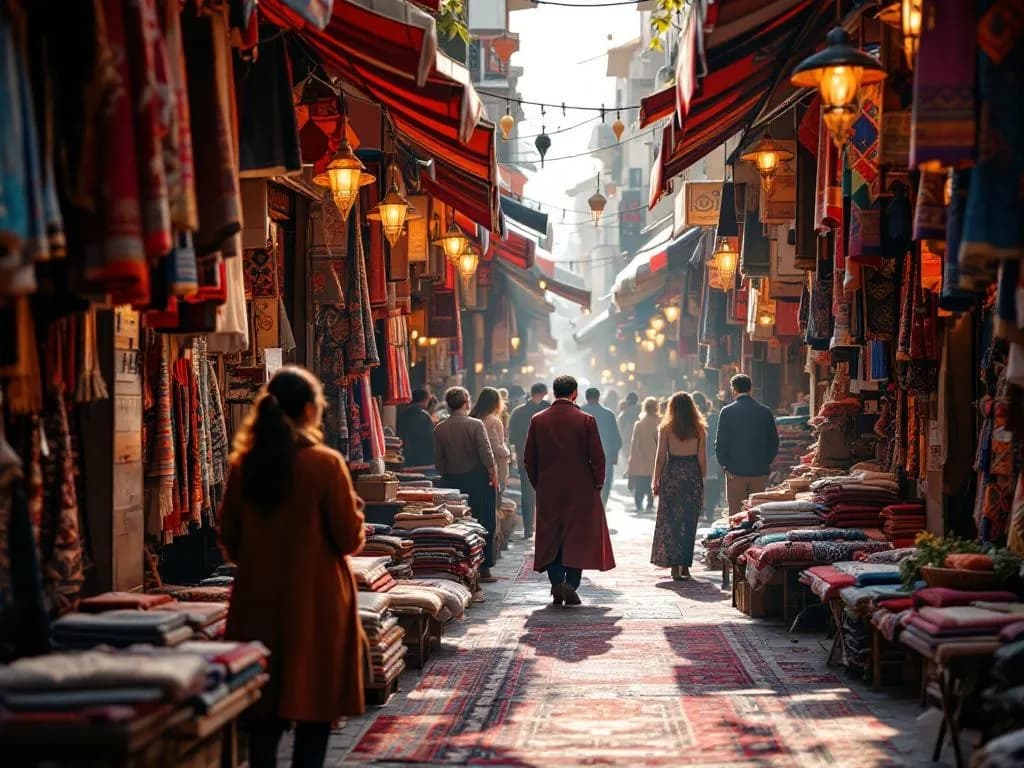
Turkish Textile Industry Overview
Turkey is one of the world's most important textile and apparel producing countries, and for good reason. The sector generates over $22 billion in annual exports, employs more than one million people, and encompasses over 60,000 companies -- from small family-owned workshops producing artisanal goods to massive vertically integrated factories exporting millions of pieces per year to the world's leading fashion brands.
What makes Turkey genuinely different from other major textile-producing countries such as China, Bangladesh, Vietnam, and India is a combination of three factors that no other country delivers simultaneously: quality, speed, and flexibility. Chinese manufacturers offer scale but require 8-12 week lead times and minimum orders of 3,000-10,000 pieces. Bangladeshi factories offer the lowest prices but with quality consistency challenges and even longer lead times. Turkish manufacturers, by contrast, deliver design-to-production cycles of just 2-4 weeks, accept orders as low as 100-500 pieces, and produce to EU quality standards as a matter of course.
The rise of fast fashion, the post-pandemic nearshoring trend, and the growing demand for sustainable and transparent supply chains have all strengthened Turkey's position dramatically. For European, Middle Eastern, and North African buyers, Turkey is increasingly the first-choice sourcing destination for textiles.
Turkey's textile sector delivers from design to finished product in 2-4 weeks, accepts MOQs as low as 100-500 pieces, exports to the EU with 0% customs duty under the Customs Union, and leads the world in organic cotton production. No other sourcing destination offers this combination.
Turkish Textiles by the Numbers (2026)
| Indicator | Figure |
|---|---|
| Total textile and apparel exports | $22+ billion |
| Number of textile companies | 60,000+ |
| Direct employment | 1,000,000+ workers |
| Share of exports going to EU | 48% |
| Organic cotton production rank | World #1 |
| Global textile export ranking | 7th |
| Fast fashion lead time | 2-4 weeks |
| Denim export ranking | World #3 |
| Home textile export ranking | World Top 5 |
Production Regions: Where to Find What
One of Turkey's unique characteristics is regional specialisation. Different cities and regions have developed deep expertise in specific textile product categories over decades. Understanding this geographic specialisation is essential for finding the right supplier efficiently.
Istanbul: The Fashion Capital
Istanbul is Turkey's undisputed centre for ready-to-wear garment production and fashion design. The city hosts the buying offices of nearly every major international fashion brand operating in Turkey and offers the widest network of fabric suppliers, trim suppliers, and subcontractors.
Key products:
- Women's and men's outerwear (jackets, coats, blazers, dresses)
- Premium fashion garments and designer collections
- Denim and jeans (Turkey is the world's 3rd largest denim exporter)
- Sportswear, athleisure, and activewear
- Leather and suede garments
- Lingerie and swimwear
Industrial districts: Merter, Osmanbey, Laleli, Gunesli, Beylikduzu, Ikitelli, Bagcilar
Why Istanbul?
- Broadest fabric and accessory supply network in Turkey
- Fastest sampling turnaround (proto samples in 7-10 days)
- Lowest MOQs (as low as 100-300 pieces for garments)
- Concentration of design talent and trend awareness
- Direct access to Istanbul Airport for air freight
Denizli: The Home Textile Capital
Denizli is the global powerhouse for towels, bathrobes, and home textile products. The city accounts for approximately 15% of the world's total towel exports and serves major hotel chains, retail brands, and hospitality groups worldwide.
Key products:
- Towels and bathrobes (terry, velour, waffle, peshtemal)
- Bed linen sets, fitted sheets, and duvet covers
- Bedspreads, quilts, and throws
- Table linen (tablecloths, napkins, runners)
- Hotel textiles (HORECA sector)
- Cotton yarn and fabric production
Unique advantage: Denizli offers true vertical integration. From raw cotton processing to spinning, weaving, dyeing, finishing, and packaging, the entire production chain exists within a 50-kilometre radius. This means tighter quality control, faster lead times, and greater price competitiveness.
Typical MOQs: 500-2,000 kg for towels; 500-1,000 pieces for bed linen; 1,000-3,000 pieces for bathrobes
Bursa: The Versatile Production Hub
Located on the historic Silk Road, Bursa has been a textile city for centuries. Today it combines this heritage with modern manufacturing capabilities across a diverse product range.
Key products:
- Synthetic fabrics (polyester, nylon, elastane blends)
- Automotive upholstery fabrics
- Hosiery, socks, and underwear
- Silk and silk-blend products
- Technical textiles and nonwovens
- Curtain and upholstery fabrics
Why Bursa?
- Turkey's centre for synthetic fabric production
- Strong in technical textiles due to proximity to the automotive sector (Ford, Renault, Fiat, and Karsan all have plants in the region)
- Well-developed dyeing and finishing infrastructure
- Two-hour drive from Istanbul
Gaziantep: Carpet and Rug Capital of the World
Gaziantep dominates global machine-made carpet production. With over 500 carpet factories and $2.5 billion in annual carpet exports, the city is the undisputed world leader in its category.
Key products:
- Machine-made carpets (BCF, heat-set, Wilton, Axminster)
- Handwoven kilims and traditional rugs
- Artificial grass and sports surfaces
- Technical textiles (geotextiles, filtration fabrics)
- Packaging textiles and polypropylene products
Scale: Gaziantep alone accounts for roughly 10% of global machine-made carpet production.
Kahramanmaras: The Yarn and Fabric Hub
One of Turkey's most important centres for upstream textile production (yarn and fabric), Kahramanmaras plays a critical role in the raw material supply chain.
Key products:
- Cotton yarn (ring-spun, open-end, compact)
- Polyester and viscose yarn
- Blended yarns (cotton-polyester, cotton-viscose)
- Knitted fabric (single jersey, interlock, rib, fleece)
- Denim fabric
Corlu-Tekirdag: The Finishing Centre
Located in Thrace, just an hour from Istanbul, the Corlu-Tekirdag region has become Turkey's primary hub for dyeing, printing, and finishing operations. Many Istanbul-based garment manufacturers outsource their fabric finishing to this region.
Fabric Types and Specialisations
Turkey produces virtually every fabric type used in the global textile industry. Here is an overview of the major categories and Turkey's specific strengths in each:
Natural Fibres
- Cotton: Turkey is the world's 7th largest cotton producer and #1 in organic cotton. Aegean cotton (from the Izmir/Aydin region) is prized for its long staple and softness.
- Wool: Produced primarily in Central and Eastern Anatolia. Turkish mohair (from Angora goats) is world-renowned.
- Silk: Bursa has centuries of silk production history. Production volumes are smaller but quality is exceptional.
- Linen: Growing production, particularly for high-end fashion and home textiles.
Synthetic and Man-Made Fibres
- Polyester: Large-scale production in Bursa and Gaziantep. Turkey is a European leader in recycled polyester (rPET) yarn production from post-consumer PET bottles.
- Nylon (Polyamide): Produced for hosiery, underwear, and technical applications.
- Viscose/Rayon: Blended with cotton or used standalone for fashion garments.
- Elastane (Spandex): Added to cotton and synthetic fabrics for stretch properties.
Specialty and Technical Fabrics
- Denim: Turkey is the world's 3rd largest denim exporter. Iskenderun, Kahramanmaras, and Istanbul are key production centres. Turkish denim mills offer innovative washes, sustainable processes (ozone, laser), and fast sampling.
- Terry cloth: Denizli-based production for towels and bathrobes. Available in weights from 300 gsm to 700 gsm.
- Automotive textiles: Produced in Bursa for vehicle seat covers, headliners, door panels, and trunk linings.
- Geotextiles: Produced in Gaziantep and Istanbul for civil engineering applications.
- Medical textiles: Surgical drapes, masks, gowns, and protective garments. This sector saw massive growth post-2020.
Quality Control: Ensuring Consistent Standards
Quality control is the most important factor in successful textile sourcing. Turkey's proximity to Europe means that quality problems are discovered quickly and damage brand relationships directly. Investing in a rigorous QC process is non-negotiable.
Certifications to Look For
When evaluating a Turkish textile supplier, the following certifications indicate adherence to international quality and safety standards:
| Certification | What It Covers | Why It Matters |
|---|---|---|
| OEKO-TEX Standard 100 | Testing for harmful substances | Essential for baby, children's, and skin-contact products |
| OEKO-TEX STeP | Sustainable production facility | Documents environmental performance of the factory |
| GOTS | Organic textile standard | The gold standard for organic textile certification, covering the entire supply chain |
| GRS (Global Recycled Standard) | Recycled material content | Required by sustainable fashion brands using recycled fibres |
| BCI (Better Cotton Initiative) | Responsible cotton sourcing | Increasingly required by major European and American retailers |
| ISO 9001 | Quality management system | Demonstrates systematic quality management processes |
| ISO 14001 | Environmental management | Shows commitment to environmental responsibility |
Social Compliance Audits
Major international buyers require social compliance audits to verify fair labour practices:
- BSCI (Business Social Compliance Initiative): The most commonly requested audit standard by European retailers
- SEDEX/SMETA: Ethical trade audit platform used by UK retailers
- SA8000: International social accountability standard
- WRAP (Worldwide Responsible Accredited Production): Certification for legal, humane, and ethical manufacturing
The 3-Stage Quality Control Process
We recommend implementing a 3-stage QC process for every production order:
Stage 1: Initial Production Inspection (IPI)
- Conducted when the first 10-15% of production is complete
- Verifies: fabric quality, colour matching to approved lab dips, pattern accuracy, stitching quality on first pieces
- Purpose: Catch problems at the earliest possible stage when corrections are cheapest
Stage 2: During Production Inspection (DPI)
- Conducted when 40-60% of production is complete
- Uses AQL 2.5 sampling methodology
- Verifies: systematic defect patterns, measurement consistency, workmanship uniformity across production lines
- Purpose: Identify and correct any drift from specifications before the entire order is affected
Stage 3: Pre-Shipment Inspection (PSI)
- Conducted when 100% of production is complete and packed
- Full AQL 2.5 level inspection
- Checks: workmanship, measurements (all sizes), colour consistency, labelling accuracy, packaging quality, carton marking, barcode scanning, needle detection
- Purpose: Final approval gate before shipment. No goods should ship without passing PSI.
Fabric Testing
For critical quality parameters, independent laboratory testing should be conducted:
- Colour fastness: Washing, rubbing (wet and dry), light, perspiration
- Dimensional stability: Shrinkage after washing (both warp and weft)
- Tensile strength and tear strength
- Pilling resistance
- Weight per square metre (GSM)
- Composition analysis: Verifies fibre content matches specifications
Turkish testing laboratories such as Intertek Istanbul, Bureau Veritas Turkey, and SGS Turkey provide comprehensive textile testing services.
MOQ and Pricing: What to Expect
Minimum Order Quantities by Product Type
MOQ expectations vary significantly depending on the product type, production complexity, and supplier size:
| Product Category | Typical MOQ Range | Notes |
|---|---|---|
| Basic garments (T-shirts, polos) | 200-500 pieces per colour/size | Lower MOQs available in Istanbul |
| Fashion garments (dresses, blouses) | 100-300 pieces per style | Istanbul speciality |
| Denim/jeans | 300-1,000 pieces | Depends on wash requirements |
| Towels | 500-2,000 kg | Denizli standard |
| Bathrobes | 500-1,500 pieces | Lower MOQs for hotel custom orders |
| Bed linen | 500-1,000 sets | Per design/colour combination |
| Carpets | 200-500 sqm | Gaziantep standard |
| Fabrics | 1,000-3,000 metres | Per colour/quality |
| Yarn | 5,000-10,000 kg | Per count/blend |
Important: Many Turkish suppliers are willing to negotiate MOQs, especially for new customers they want to develop a long-term relationship with. The first order may be accepted at a lower MOQ, with the expectation that subsequent orders will increase.
Price Comparison (2026 Average FOB Prices)
| Product | Turkey | China | Bangladesh | India |
|---|---|---|---|---|
| Cotton T-shirt (180gsm) | $3.50-5.50 | $2.00-3.50 | $1.80-2.80 | $2.20-3.50 |
| Men's dress shirt | $8-14 | $5-9 | $4-7 | $5-8 |
| Denim trousers | $10-18 | $7-12 | $5-9 | $6-10 |
| Women's dress | $12-22 | $8-15 | $6-10 | $7-12 |
| Towel (70x140cm, 500gsm) | $3-6 | $2-4 | $1.50-3 | $2-4 |
| Bed linen set (200TC) | $15-25 | $10-18 | $8-14 | $9-16 |
Critical context: Turkey's unit prices are higher than China, Bangladesh, and India. However, the total landed cost calculation tells a different story when you factor in:
- EU Customs Union: 0% duty vs. 12% from China or 9.6% from Bangladesh (GSP+)
- Shipping costs and transit time: 3-7 days and lower freight from Turkey vs. 30-45 days from Asia
- Lower MOQs: Less capital tied up in inventory
- Faster replenishment: Ability to order small and often, reducing overstock risk
- Fewer quality issues: Reducing the cost of returns, markdowns, and customer complaints
- Sustainability credentials: Increasingly required by European retailers and consumers
When all these factors are included, Turkey is often the most cost-effective option for European importers, despite higher unit prices.
Sustainable Manufacturing: Turkey's Competitive Frontier
Sustainability has moved from a "nice-to-have" to a commercial imperative in the textile industry. European regulations (EU Green Deal, Extended Producer Responsibility, Digital Product Passport), retailer requirements (Science Based Targets), and consumer preferences are all driving demand for traceable, transparent, and environmentally responsible supply chains. Turkey is uniquely positioned to meet this demand.
Organic Cotton Leadership
Turkey is the world's #1 producer of organic cotton, grown primarily in the Aegean region (Izmir, Aydin, Manisa). This gives Turkish textile manufacturers direct access to certified organic raw material without the complexity and carbon footprint of importing it from another country.
Recycled Fibre Innovation
Turkey has emerged as Europe's leader in recycled polyester (rPET) production. Several Turkish yarn manufacturers convert post-consumer PET bottles into high-quality polyester yarn that meets GRS (Global Recycled Standard) certification requirements. This yarn is used in everything from sportswear to home textiles.
Water and Energy Efficiency
Turkish textile manufacturers have invested heavily in water-saving and energy-efficient technologies:
- Ozone and laser finishing: Replacing traditional stone-washing and bleaching in denim production, reducing water consumption by up to 70%
- Digital printing: Uses 90% less water and 80% less energy than conventional rotary or flatbed printing
- Solar energy: Many large textile factories in Denizli, Gaziantep, and Kahramanmaras have installed rooftop solar panels, generating a significant portion of their electricity needs
- Closed-loop water systems: Modern dyeing facilities recycle and reuse process water
- Biomass energy: Some factories use cotton waste and other agricultural biomass as fuel
Textile Recycling
Turkey has developed a growing textile recycling infrastructure. Facilities in Istanbul, Gaziantep, and Usak process post-consumer and post-industrial textile waste into recycled fibres, which are then used to produce new yarns and fabrics. This circular economy capability is increasingly valued by brands with sustainability commitments.
Supplier Selection: How to Choose the Right Partner
Choosing the right supplier is the single most important decision in your textile sourcing process. A poor choice leads to quality problems, delivery delays, cost overruns, and damaged customer relationships. Here is a systematic approach to supplier selection:
Step 1: Define Your Requirements Clearly
Before contacting any supplier, prepare a comprehensive technical file:
- Product specifications: Flat sketch or technical drawing, measurements, grading rules
- Fabric details: Composition (e.g., 100% organic cotton, 190 gsm), construction (single jersey, twill), colour (Pantone references)
- Trim and accessories: Buttons, zippers, labels, prints, embroidery
- Quality standards: Target certifications (OEKO-TEX, GOTS), colourfastness requirements, shrinkage tolerance
- Packaging: Folding method, polybag, hang tag, carton configuration, shipping marks
- Volume: Target order quantity and anticipated annual volume
- Price: Target FOB price and payment terms preference
- Delivery: Required delivery date and shipping mode
Step 2: Identify Potential Suppliers
Use multiple channels to build a longlist of potential suppliers:
- Professional sourcing companies: Firms like Toko Trading maintain verified supplier networks and can provide a curated shortlist based on your specific requirements
- Trade fairs: Texworld Istanbul, IF Wedding Fashion Izmir, Bursa Textile Show, HOMETEX Istanbul
- Industry associations: ITKIB (Istanbul Textile and Apparel Exporters' Associations), TGSD (Turkish Clothing Manufacturers' Association)
- B2B platforms: Alibaba, TradeKey, Kompass, Turkishexporter.net
- Referrals: Ask business contacts, freight forwarders, and customs brokers for recommendations
Step 3: Evaluate and Shortlist
Score each potential supplier against a weighted evaluation matrix:
| Criterion | Weight | What to Check |
|---|---|---|
| Production capacity | 20% | Monthly output, current utilisation, factory size, number of lines |
| Quality certifications | 20% | OEKO-TEX, GOTS, GRS, ISO, social audit status and dates |
| References and experience | 15% | Existing international clients, brand names, years in export |
| MOQ flexibility | 15% | Willingness to accept your target order sizes |
| Communication | 15% | Response speed, English proficiency, technical understanding |
| Price competitiveness | 15% | Price-quality ratio, willingness to negotiate, payment terms |
Step 4: Conduct Factory Visits
There is no substitute for seeing a factory with your own eyes. A factory visit reveals things that no catalogue, certification, or video call can:
- Actual condition of machinery and equipment
- Factory cleanliness and housekeeping standards
- Worker conditions and workplace environment
- True production capacity (is the factory actually as large as claimed?)
- Quality control infrastructure (do they have a QC room, testing equipment, trained QC staff?)
- Inventory management (fabric and trim storage conditions)
If you cannot visit personally, Toko Trading conducts factory audits on your behalf and provides detailed reports with photographs, video, and scoring.
Step 5: Develop Samples
Request samples from your shortlisted suppliers (typically 2-3) and evaluate them side by side:
| Sample Stage | Timeline | Purpose |
|---|---|---|
| Proto sample | 7-14 days | First trial based on your tech pack |
| Fit sample | 5-10 days | Corrections based on proto feedback |
| Pre-production sample (PPS) | 5-7 days | Made with actual production fabric and trims |
| Size set | 7-10 days | All sizes for grading verification |
| Shipment sample | During production | Random pulls from bulk for final approval |
Sample costs: Typically $50-200 per sample. Most suppliers deduct sample costs from the first production order.
Shipping and Logistics
Transport Modes for Textile Shipments
| Mode | Transit Time | Best For | Cost Level |
|---|---|---|---|
| Sea freight (FCL) | 8-25 days | Full container loads, large orders | Most economical |
| Sea freight (LCL) | 12-30 days | Smaller orders consolidated with others | Economical |
| Road freight | 3-7 days | European destinations | Moderate |
| Air freight | 1-3 days | Urgent orders, samples, high-value items | Highest |
| Express courier | 2-5 days | Individual samples, documents | High |
Key Documents for Textile Exports from Turkey
- Commercial invoice: Product details, quantities, values, Incoterms
- Packing list: Contents, weights, dimensions of each carton
- Bill of lading or air waybill: Carrier's receipt of goods
- ATR Movement Certificate: For zero-duty entry to EU markets
- EUR.1 Movement Certificate: For preferential rates to FTA countries
- Certificate of Origin: Issued by the chamber of commerce
- OEKO-TEX or GOTS certificate: Product-level certification documents
- Test reports: Fabric testing results from accredited laboratories
Customs Union Advantage for Textiles
The EU Customs Union is particularly impactful for textiles because MFN (Most Favoured Nation) textile tariffs into the EU are among the highest for any product category:
| Product | MFN Duty (from China) | Turkey (with ATR) | Saving |
|---|---|---|---|
| Cotton T-shirts | 12% | 0% | 12% |
| Woven trousers | 12% | 0% | 12% |
| Bed linen | 12% | 0% | 12% |
| Towels | 12% | 0% | 12% |
| Carpets | 8% | 0% | 8% |
On a $100,000 textile shipment to the EU, sourcing from Turkey instead of China saves $8,000-12,000 in customs duties alone. Over a year of regular shipments, this adds up to a transformative cost advantage.
Partner with Toko Trading for Textile Sourcing
At Toko Trading, textile sourcing is one of our core competencies. Our team has deep relationships with manufacturers across Istanbul, Bursa, Denizli, Gaziantep, and Kahramanmaras, and we manage every step of the sourcing process on behalf of our clients.
Our textile sourcing services include:
- Supplier research and verification: We visit factories, audit quality systems, check certifications, verify production capacity, and assess financial stability. You receive a curated shortlist of suppliers that match your exact requirements.
- Sample coordination: We prepare technical files, submit them to suppliers, track sample development, and conduct hands-on quality evaluation at the factory. You receive samples with our assessment and recommendation.
- Price negotiation: We leverage our market knowledge and long-standing supplier relationships to negotiate optimal pricing and payment terms on your behalf.
- Quality control: Our 3-stage QC system (initial production check, during-production inspection, and pre-shipment inspection) ensures every order meets your specifications before it ships.
- Logistics management: We organise shipments, prepare all customs documentation (ATR, EUR.1, certificates of origin), and track delivery from factory gate to your warehouse.
- Sustainability matching: If you need suppliers with GOTS, GRS, or other sustainability certifications, we match you with verified producers.
For your textile sourcing needs from Turkey, contact us for a free consultation. In our initial meeting, we will analyse your product requirements, target volumes, and budget, and provide you with a tailored sourcing strategy and realistic cost estimate within one week.